There are places where the ordinary and the mystical have always existed side by side. In Mexico, you can walk into a market looking for flowers, fruit, or herbs and find yourself surrounded by candles, incense, charms, and plants carrying stories passed down through generations. Mexican markets have long been places of exchange, not only of food and objects, but of knowledge, remedies, beliefs, and traditions. A place where the medicinal can become ritual, and an ordinary object can hold a meaning far beyond itself.
The magic is not hidden. It is simply part of everyday life.

Herbs With a History
Walk through a Mexican market and you will quickly notice the herbs.
Beyond their aromas and familiar forms, many of these plants carry histories that move between traditional medicine, domestic remedies, and ritual practices.
Ruda is one of the most recognizable, often associated with protection and traditional cleansing practices. Interestingly, ruda is originally from Europe and became part of Mexican herbal knowledge during the colonial period.
Pirul, native to South America, also found its way into Mexican traditions. Its branches are used in some regional cleansing practices, passed around the body as a way of sweeping something away.
Romero, albahaca, and estafiate are also part of traditional herbal knowledge, appearing in preparations, remedies, and cleansing rituals.
And then there is copal. A fragrant resin from trees of the Bursera genus, copal has been used in ritual practices in Mexico since pre-Hispanic times. Its smoke accompanied offerings and ceremonies, and its unmistakable scent remains part of many traditions today.
Objects of Belief
The herbs are only the beginning.
Among the stalls, you may find veladoras, milagritos, amulets, stones, incense, and flowers small objects that give form to beliefs, wishes, and intentions.
The milagrito is perhaps one of the most intriguing.
These tiny votive objects can take the shape of a heart, a hand, an eye, an animal, or another part of the body. They may be offered as a gesture of gratitude or as a petition.
A small object for a very particular wish.
Then there are amulets and charms, kept close as symbols of protection, luck, love, or devotion.
And, of course, the veladora.
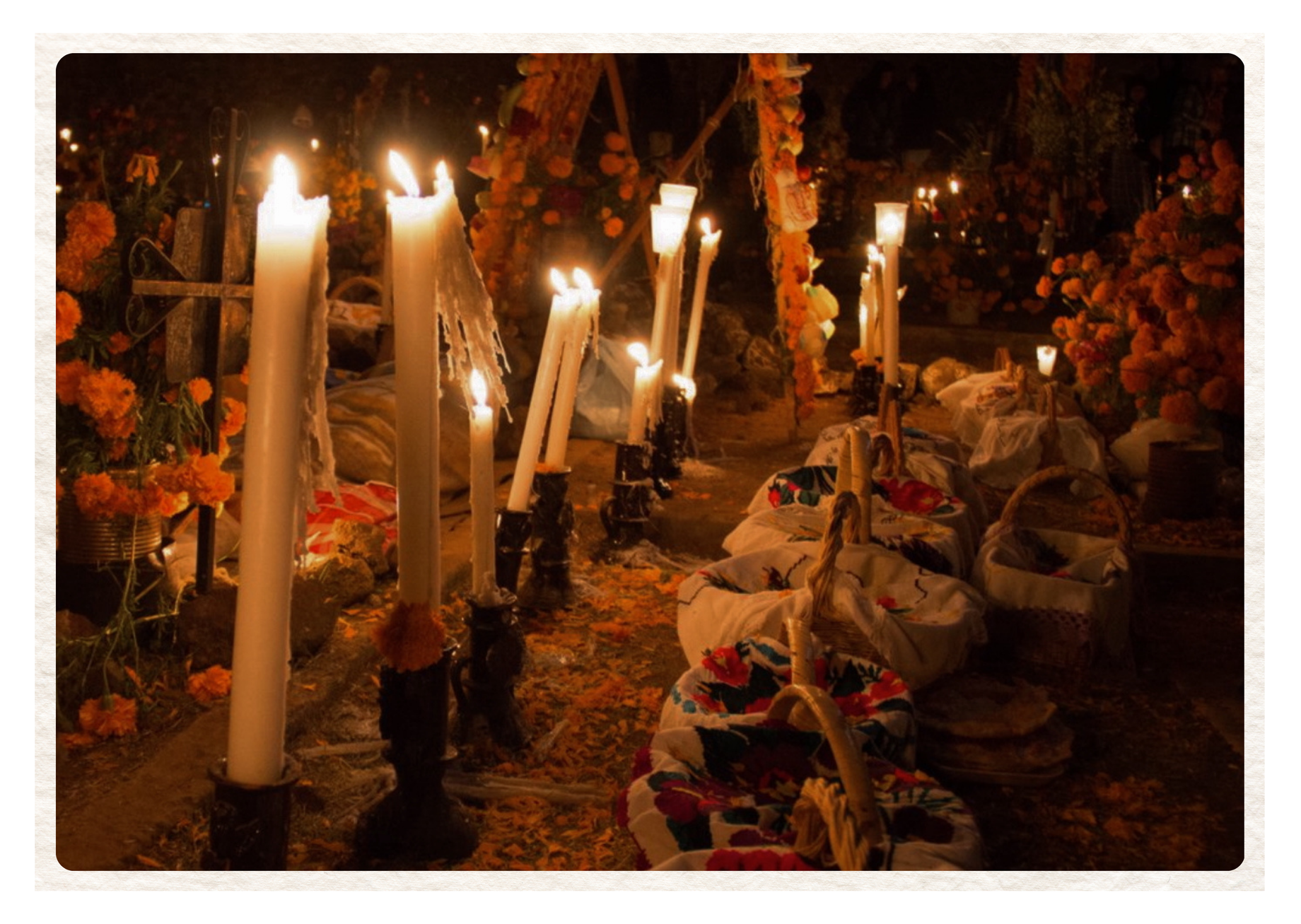
A small flame can become a prayer, an offering, a gesture of remembrance, or simply a light in the darkness.
A Note on Limpias
In some Mexican markets, you may even find people offering traditional limpias.
Depending on the region and tradition, these practices may involve herbs, smoke, eggs, water, or other elements, and are often understood as rituals of cleansing, protection, or renewal.
It is another glimpse into a world where the everyday and the ritual can exist within the same space.
The Magic Is Already There
Maybe the magic of the Mexican market is that it never needed to call itself mystical.
It is there in a bundle of ruda.
In the scent of copal.
In a candle quietly burning.
In a tiny milagrito carrying someone's hope.
In an old tradition finding its way into new hands.
Nothing remains exactly as it once was. Traditions travel, change, and take on new meanings as they pass from one generation to the next.
And maybe that is what makes them so fascinating. They are not frozen in the past, they are still being lived. The market is not a museum of ancient beliefs. t is alive.
Sometimes, you don't have to look very far to find something extraordinary. Sometimes, you only have to look closer.











1 comment
Me parece una información muy interesante y, además, muy relacionada con estas fechas y con nuestras tradiciones culturales mexicanas. Sin duda, es una excelente oportunidad para conocer, valorar y mantener vivas nuestras costumbres y nuestra identidad cultural.